
What Makes 358 Anti Climb Mesh Fencing Suitable for Sites Requiring Enhanced Perimeter Protection?
Commercial facilities, transport infrastructure and industrial sites often require perimeter protection that discourages unauthorised access without completely obstructing visibility. Choosing the right fencing system involves assessing security risks, site layout, access requirements and environmental conditions. When researching 358 anti climb mesh fencing near me, project managers should understand how the system's construction can support enhanced perimeter protection and whether it suits the site's operational needs.
1. Closely Spaced Mesh Openings
One of the defining characteristics of 358 fencing is its closely spaced mesh configuration. The small apertures provide limited footholds, making the fence more difficult to climb than many conventional mesh systems.
The openings can also restrict the ability to pass objects through the barrier. These characteristics make the system worth considering for locations where controlling unauthorised access is a priority.
The final specification should reflect the site's security assessment, required fence height and applicable project standards.
2. Maintaining Visibility Around the Perimeter
Enhanced security does not always require a solid barrier. Security personnel may need clear views of access points, adjacent roads, equipment areas and activity around the boundary.
The open mesh construction allows visibility through the fence while establishing a physical separation. This can help support CCTV monitoring and routine perimeter inspections when camera positions and surrounding conditions are considered during design.
Vegetation, buildings and other obstructions should also be assessed to minimise potential blind spots.
3. Supporting Controlled Access
Sites with restricted operational areas need clearly defined entry points for authorised staff, contractors, maintenance teams and service vehicles.
358 mesh panels can be incorporated into a perimeter system with compatible gates, locking hardware and access control equipment. Gate locations should reflect actual movement requirements, while the design should avoid unnecessary openings that could weaken the overall boundary.
Planning the fence and access points together can help maintain consistent protection across the site.
4. Protecting Sensitive Infrastructure
Data centres, utility compounds, transport facilities and government sites may contain valuable assets or critical equipment that require restricted access.
358 anti climb mesh fencing can provide a physical boundary around these areas while retaining useful visibility. The layout should consider the location of sensitive assets, nearby structures, service routes and the distance between the fence and protected equipment.
Fencing should be treated as one component of a broader security plan that may also include surveillance, lighting, alarms and access procedures.
5. Adapting to Different Site Layouts
Large commercial and infrastructure projects may involve uneven ground, drainage channels, access roads and existing services. These features can affect panel alignment, post placement and foundation requirements.
A site assessment should identify changes in elevation, soil conditions and potential installation obstacles before the fencing system is specified. Gate dimensions and the alignment of adjoining sections should also be coordinated with the site's layout.
Early planning can help reduce installation conflicts and avoid unnecessary modifications during construction.
6. Considering Durability and Environmental Exposure
Outdoor perimeter fencing may be exposed to rain, moisture, industrial contaminants and changing temperatures. Material selection and protective finishes should reflect the conditions at the installation site.
Posts, panels, fixings and gate components should be specified as part of a complete system. Installation quality and routine maintenance also influence long-term performance.
Periodic inspections can help identify corrosion, damaged mesh, loose fittings and alignment issues before they compromise the fence's condition.
7. Integrating With Other Security Measures
A perimeter barrier can be more effective when coordinated with the site's wider security arrangements. CCTV cameras, lighting, alarms and access control systems may provide additional layers of protection where required.
Project teams should assess sightlines, camera coverage, lighting positions and entry procedures during the design stage. The fencing layout should support these systems without creating avoidable obstructions or operational difficulties.
This integrated approach helps ensure the physical boundary aligns with the site's security objectives.
FAQs
What is 358 anti-climb mesh fencing designed for?
It is designed for security applications where resistance to climbing and unauthorised access is important while maintaining visibility through the perimeter.
Why is 358 mesh difficult to climb?
Its closely spaced apertures provide limited footholds, making climbing more difficult than with many conventional open-mesh fencing designs.
Can 358 mesh fencing support CCTV surveillance?
Yes. Its open construction can preserve useful sightlines for CCTV, provided camera positions and surrounding obstructions are considered.
Where can 358 anti-climb mesh fencing be installed?
Potential applications include data centres, utility sites, transport infrastructure, industrial compounds, government facilities and other restricted operational areas.
What should be assessed before installation?
Project teams should review security risks, site conditions, fence height, access points, visibility, environmental exposure, installation constraints and maintenance requirements.
Enhanced perimeter protection depends on selecting a system that suits the site's security risks, layout and operational requirements. Closely spaced mesh, useful visibility, controlled access and compatibility with wider security measures can make this fencing system appropriate for selected high-security environments. When comparing 358 anti climb mesh fencing near me, project teams should assess the site's specific needs and consider 358 anti climb mesh fencing as part of a coordinated perimeter security strategy.
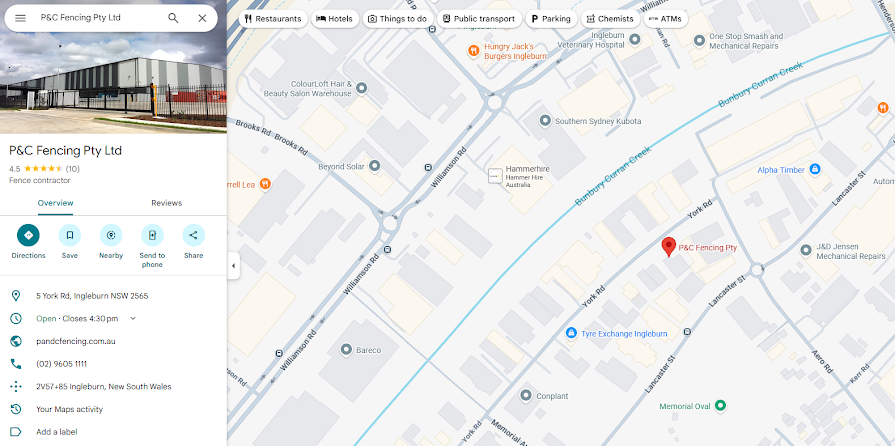
P&C Fencing Pty Ltd
5 York Rd,
Ingleburn NSW 2565
Australia
(02) 9605 1111
Comments (0)
Want to join the discussion?
Log In to Comment