
Semiconductor manufacturing requires strict control over production conditions because electronic components contain delicate structures that can be affected by electrostatic discharge. Integrated circuits, microprocessors, memory chips, transistors, and other semiconductor devices may experience electrical damage even when a discharge is too small for workers to notice. Such damage can affect component performance, shorten service life, or cause unexpected failures during subsequent testing. As semiconductor production becomes increasingly precise, manufacturers need reliable methods to monitor electrostatic protection measures throughout their facilities. SISCO ESD testers (electrostatic discharge testers) provide practical instruments for checking selected elements of these protective systems and supporting consistent manufacturing quality.
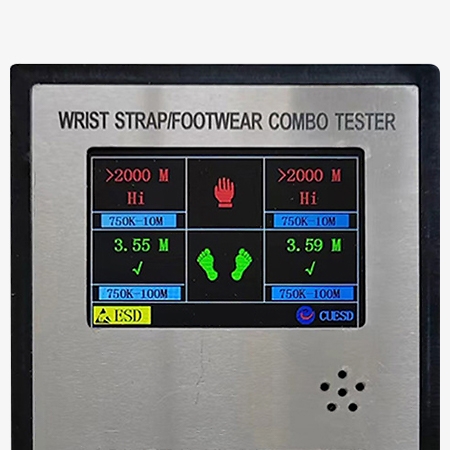
One important application is verifying the effectiveness of personnel grounding equipment. Semiconductor production employees frequently work with exposed electronic wafers, packaged devices, and sensitive circuit assemblies. If a worker accumulates electrical charge, direct contact with these products may create an electrostatic discharge risk. SISCO wrist strap testers help operators verify that compatible wrist strap grounding systems meet their specified acceptance limits before handling sensitive components. This simple inspection can be incorporated into workstation access procedures, shift-start checks, and routine production activities. By identifying defective straps or connection problems early, manufacturers can reduce the likelihood of relying on improperly functioning personnel grounding equipment.
Workstation evaluation is another important part of semiconductor quality management. Assembly benches, inspection stations, and electronic testing areas often incorporate specialized static-control materials. Their electrical characteristics need to remain suitable for their intended functions throughout regular use. SISCO surface resistance testers allow quality inspectors to measure the resistance of compatible materials and compare the results with established specifications. Periodic measurements can help identify unexpected changes associated with surface wear, contamination, cleaning, or material aging. Maintenance personnel can then investigate abnormal results and determine whether corrective action is necessary.

ESD testing can also contribute to equipment maintenance and production troubleshooting. When an electrostatic protection problem is suspected, engineers may need to examine multiple workstations, personnel grounding arrangements, and surrounding materials. Different SISCO tester configurations provide measurement capabilities for different inspection requirements. Wrist strap testers evaluate compatible grounding equipment, while surface resistance meters provide information about material properties. Electrostatic field testers can help investigate charge accumulation on selected objects and surfaces. Using appropriate instruments together allows technical teams to collect more comprehensive information about potential static-related problems.
In addition to production facilities, these testing practices are useful in semiconductor research laboratories, microelectronics development centers, circuit board manufacturing plants, and electronic component testing departments. These environments often handle expensive prototypes and sensitive devices that require careful electrostatic protection. Regular inspection records can also help quality managers review testing consistency, identify recurring equipment problems, and improve employee training procedures.
SISCO ESD testers offer manufacturers practical support for maintaining electrostatic control throughout semiconductor production. By providing measurable information about personnel grounding, material resistance, and electrostatic conditions, these instruments help organizations identify potential weaknesses before they develop into larger quality concerns. Although no individual tester can guarantee complete protection against electrostatic discharge, incorporating suitable testing equipment into a comprehensive ESD control program helps strengthen manufacturing procedures, protect sensitive components, and support dependable semiconductor product quality.
Electrostatic control remains important after an electronic product leaves the assembly workstation. Circuit boards, semiconductor devices, electronic modules, and replacement parts may encounter static-generating materials during inspection, packing, warehousing, and transportation preparation. Packaging materials should therefore be selected according to the sensitivity of the product and the requirements of the applicable ESD control program. SISCO electrostatic discharge testers can help personnel evaluate selected materials and investigate electrostatic conditions during packaging operations. For example, a surface resistance meter may be used to examine appropriate conductive or dissipative packaging materials when the relevant test method calls for resistance measurement. A non-contact field tester may help identify charge accumulation on exposed plastic film or other insulating materials during packaging trials. These measurements can provide useful information when comparing material types, reviewing supplier changes, or investigating recurring handling difficulties. Quality personnel can record the results alongside packaging specifications and incoming inspection information, creating a more consistent basis for material evaluation. Testing should not be interpreted as proof that a packaging material offers complete protection against every electrostatic event. Different packaging functions require different properties, and surface resistance alone does not establish shielding performance or compliance with all packaging requirements. By using suitable instruments within a broader packaging validation process, businesses can make more informed material choices, strengthen handling procedures, and support the safe movement of electrostatic-sensitive products through distribution channels.
Comments (0)
Want to join the discussion?
Log In to Comment