
A motorhome parked in direct sun can get uncomfortably hot within an hour or two, and most of that heat comes in through the glass. Running the air conditioner helps, but it uses a lot of power, especially when you are camping without a hookup. RV sun shades are a simpler way to cut down the heat before it builds up. This guide explains the main types, where each one works best, how to choose and measure one, and what else you can do to keep your motorhome cool.
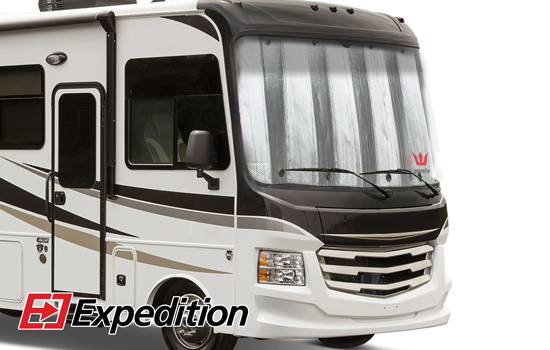
Do RV Sun Shades Really Work?
Yes. A sun shade blocks sunlight before it lands on your seats, floors, and counters, where it turns into heat. Reflective shades send much of that light back out. Mesh and fabric shades filter or absorb it. Both approaches can help reduce heat buildup inside the motorhome.
Shades also keep UV off the dash, upholstery, and curtains. Over several summers, UV exposure fades fabric and cracks dash panels.
Curtains and blinds help with glare and privacy, but they sit behind the glass. By the time sunlight reaches them, it has already entered the cabin. A shade deals with it earlier.
Types of RV Sun Shades
|
Type |
Best for |
Advantages |
Trade-offs |
|
Interior spring or collapsible shades |
Side windows, quick setup |
Inexpensive, easy to store |
Sunlight is already inside the glass |
|
Reflective windshield shades |
Front windshield |
Strong heat and UV reflection, adds privacy |
Must match the windshield size |
|
Exterior mesh or snap-on shades |
Side and rear windows |
Blocks sun before it reaches the glass, keeps some view |
Slower to put up and take down |
|
Magnetic or custom-made shades |
A precise fit |
Clean look, no drilling |
Higher price, usually made to order |
|
Awning side shades |
Patio and campsite |
Adds shaded outdoor space |
Does not cool the interior |
The main choice is between interior and exterior shades. Exterior shades stop the sun before it reaches the glass, so they usually keep the cabin cooler. Interior shades are quicker to use and are not affected by wind or rain. Many owners combine them with exterior mesh on the side windows and a reflective shade on the windshield.
Why the Windshield Needs Its Own Sun Shade
On a Class A motorhome, the windshield is the largest piece of glass and sits directly above the dash. In summer, the dash and steering wheel can get too hot to touch, and years of that exposure lead to fading and cracking. Side-window shades do nothing for this area, and car-sized shades rarely cover the whole glass.
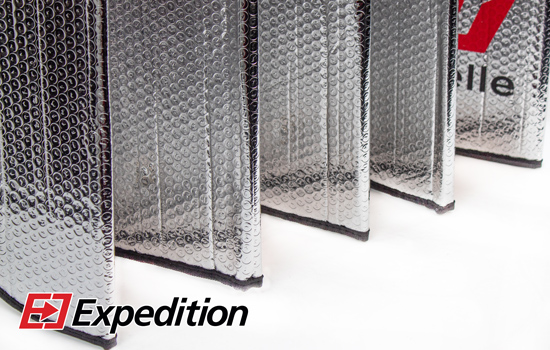
A fitted reflective shade is the usual fix. A Class A RV windshield sun shade of this kind is typically built with a foam core between two layers of Mylar. The outer layer has an aluminized coating that reflects sunlight, and the inner layer keeps the shade stiff enough to hold its shape against the glass. Suction cups through reinforced grommets hold it in place, and an elastic strap keeps it rolled up in storage. These shades are cut to specific windshield sizes, one example being 94 inches long by 42 inches wide, which is why measuring first matters.
There is also a privacy benefit. With the shade up, people walking past a campsite or parking lot cannot see into the cab.
How to Choose the Right RV Sun Shades
- Fit. Measure your windows instead of guessing. Gaps along the edges let in light and heat.
- Material. Reflective, insulated layers suit windshields. Mesh suits side windows where you want to keep some view.
- Mounting method. Suction cups, magnets, snaps, and tension rods each have different setup times and limits.
- Storage. Check where it will go when not in use. A shade that rolls or folds flat is easier to live with.
- How you travel. Full-timers and snowbirds use shades daily, so durability counts. Seasonal owners may care more about easy storage.
- Visibility and privacy. Decide whether you want to see out while parked. Opaque shades give privacy but block the view.
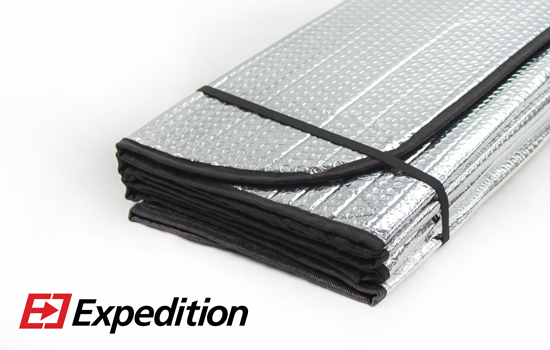
Universal shades are cheaper, but they often leave gaps on a large Class A windshield. If you plan to use the shade every day, a model sized for your windshield is usually the better buy.
How to Measure and Install a Windshield Shade
- Measure the widest point of the glass, then the tallest point, using a tape measure from inside the cab.
- Check for curves. A curved windshield can measure differently along the surface than in a straight line, so take both and compare them with the manufacturer’s size listing.
- Note anything in the way, such as mirrors, visors, or a dash-mounted camera.
- Clean the glass so the suction cups hold.
- Start at the top center, press the cups against the glass, then work outward to the corners.
If your measurements fall between two sizes, contact the seller before ordering.
Other Ways to Keep Your Motorhome Cool
- Park with the windshield facing away from the afternoon sun when you can.
- Run roof vent fans to push hot air out.
- Use curtains behind the shades for a second barrier.
- Cover other large windows, such as rear and door windows.
- Open windows on opposite sides in the evening to move air through.
Conclusion
RV sun shades are a low-cost way to reduce interior heat, protect the dash and fabrics from UV rays, and enjoy more privacy at the campsite. They are also useful RV accessories that help improve comfort and protect your motorhome during warm weather. The right choice depends on the window. Exterior mesh works well on the sides, while a reflective shade suits the windshield. Whichever you pick, measure the glass first, since a poor fit lets in light and heat around the edges. For Class A owners, a fitted windshield shade is usually the most noticeable upgrade. Combining it with good ventilation and other practical RV accessories will help keep your motorhome comfortable throughout the summer.
Comments (0)
Want to join the discussion?
Log In to Comment